

Research Skills Are the Clinical Superpower of Dental Hygiene
By understanding how evidence is generated and evaluated, dental hygienists can confidently translate research into better patient outcomes.
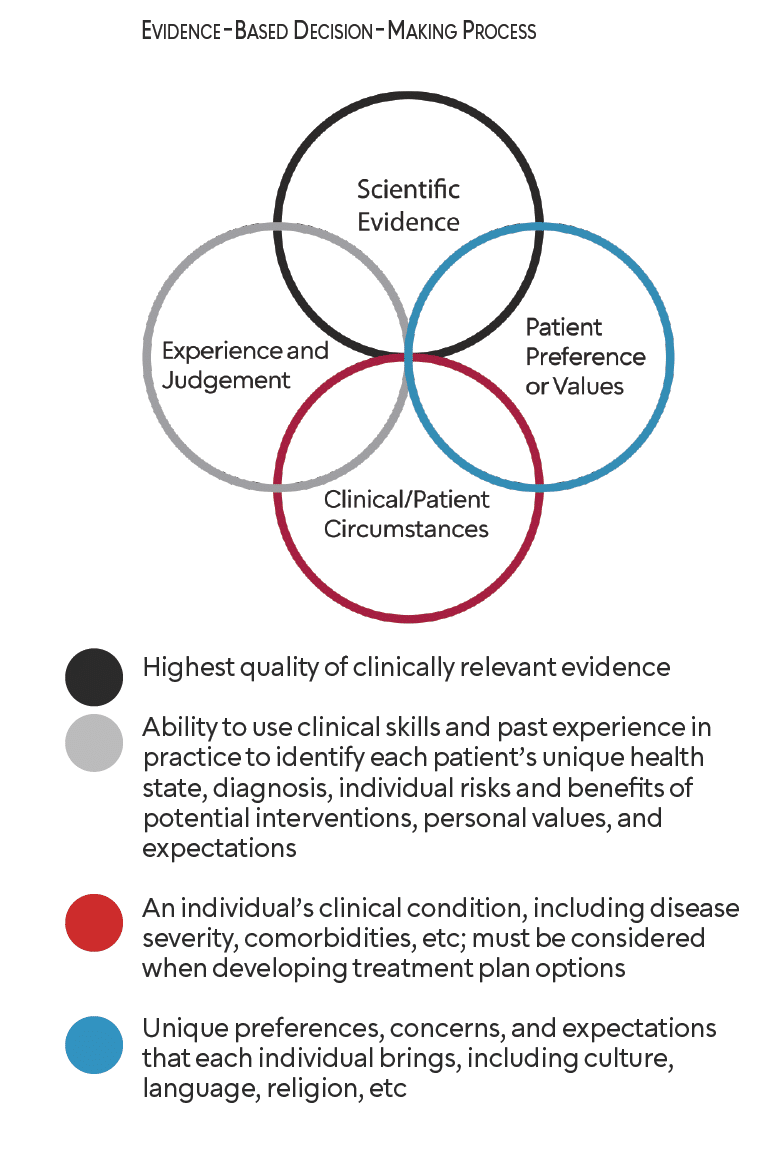 Developing a strong understanding of research concepts and applying them effectively to clinical dental hygiene practice are skills that evolve through continuous learning, critical thinking, and reflection. Research application is rooted in evidence-based practice, which integrates the best available evidence, clinical expertise, and patient preferences.1-4 Building research literacy begins with understanding foundational study designs and recognizing the relative strength of the evidence each provides.
Qualitative or Quantitative
Qualitative research seeks to understand participants’ experiences, perceptions, and behavior through observation, open-ended interviewing, and reviewing documents.5 An example of qualitative research is starting an oral hygiene education program at a nursing home and surveying residents through questionnaires on the perception of dental care, their current oral hygiene education level, and their attitudes toward learning new oral hygiene skills.6
Quantitative research is a methodological approach used to test objective theories by examining the relationships among variables through statistical and numerical analysis. This type of research is primarily concerned with measurement and comparison, allowing researchers to evaluate hypotheses in a systematic manner.5,7 The primary goals of quantitative research are establishing factual evidence, identifying and predicting future trends, examining relationships between variables, and testing existing theories. Quantitative studies are able to produce objective and generalizable findings when appropriate sampling and experimental controls are used.8
Observational Study Design
Observational studies are either descriptive or analytical.2,9 In most dental public health cases, descriptive observational research attempts to identify and describe the topic being researched to quantify the disease status in a community. Case series reports specifically focus on the prevalence of a disease in a small group and can be useful in building knowledge and generating hypotheses.9, 10
Correlational and historical studies are types of observational descriptive research. Correlational studies are used to examine the degree and direction of relationships between two or more variables without manipulation.3,9 These studies do not establish causation; rather, they identify whether an association exists between variables. For example, correlational research has been used to investigate potential relationships between periodontal diseases and obesity.
Historical research involves systematic examination of past events, documents, and records to understand their significance. This approach allows researchers to identify patterns and outcomes over time. By analyzing previously collected data and archival materials, historical studies contribute to a deeper understanding of how knowledge and practices have evolved within a given field.
Analytical observational studies attempt to determine the etiology of a disease and quantify the association between exposure and outcome. Examples include case-control studies, cohort studies, ecological studies and cross-sectional studies.9 A cross-sectional study is a survey or measurement that represents a snapshot in time.9,10 In longitudinal analytical studies, results are observed over a period of time.
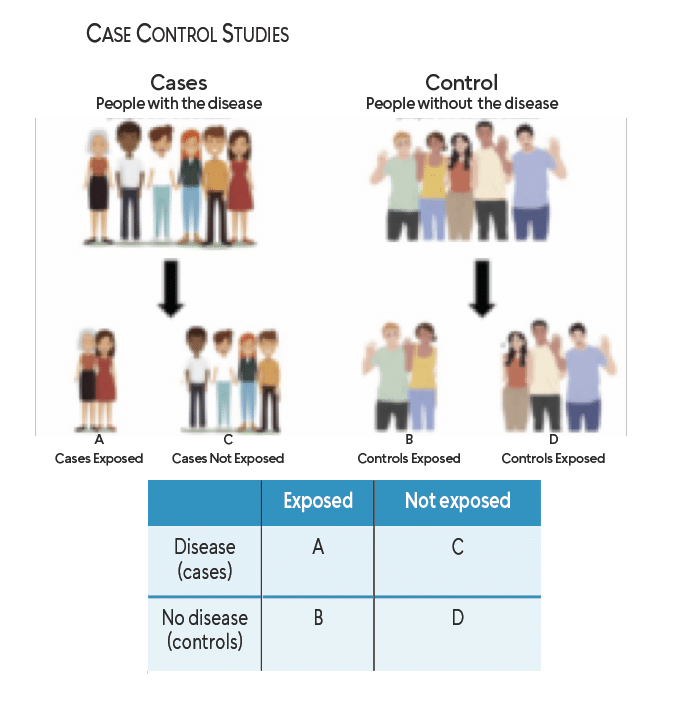
Case-control studies are retrospective (they look backward) and follow two populations: people with a condition called the cases and individuals without that condition called the controls.3,9,11 These studies allow researchers to explore associations between potential risk factors and various health conditions. A case-control study demonstrated a link between carcinoma of the lung and smoking tobacco.11
Cohort studies and longitudinal ecological studies are prospective in nature. They measure one group of individuals (the cohort) over time and record information multiple times to determine risks. Cohort studies excel at unraveling the causes of dental ailments. By tracking individuals over time, they can pinpoint factors like socioeconomic status, dietary habits, or early childhood experiences that contribute to the development of caries, periodontal disease, or oral cancer.11,12
![]() Experimental Studies
Experimental Studies
Experimental studies, commonly referred to as clinical trials, aim to evaluate cause-and-effect relationships through the deliberate manipulation of variables.9 These studies are widely regarded as providing a high level of scientific evidence because they allow researchers to control external factors and minimize potential sources of bias. In experimental research, the independent variable represents the factor that is intentionally manipulated by the investigator, while the dependent variable reflects the outcome or response that is measured to assess the effect of that manipulation.3 The relationship between these variables is central to determining whether a causal link exists.
One of the defining characteristics of experimental studies is the use of controlled environments where conditions can be standardized across participants. This level of control enhances the internal validity of the study and increases confidence that observed changes in the dependent variable are directly attributable to the independent variable, rather than to confounding influences. Internal validity refers to the degree to which a study can confidently demonstrate that the observed effects are caused by the independent variable rather than by the confounding factors, bias, or other alternative explanations.12,13 Additionally, many experimental designs incorporate randomization and control groups, which further strengthen the reliability and validity of the findings.14
Key Sampling Techniques
With sampling, the researcher can observe the entire population and add more weight to findings.5 Sampling is implemented when limited resources, time, and money make it difficult to obtain answers from a particular population. When a sample accurately reflects the larger population, the data collected can provide reliable results comparable to those obtained from studying the entire population, while reducing bias.5,6 Reliability and validity are two of the most important indicators of the quality of a measurement instrument.16
Quantitative research emphasizes systematic measurement of variables in order to answer research questions and test hypotheses.10 These methods rely on numerical data and statistical analysis to identify patterns, relationships, and trends. Survey research, a quantitative method, is used to describe characteristics such as attitudes, opinions, or behaviors within a population, or to examine associations among variables. Survey designs are particularly useful in dental research for assessing patient experiences, treatment outcomes, and preventive behaviors.17
The best way to ensure adequate representation is to take a simple random sample. This sample is formulated so that each time or person in the population has the same chance of being included.1, 5
Predictability refers to the extent to which a variable or set of variables can accurately account for study outcomes. High predictability suggests the relationship between variables is consistent and can be used to estimate future outcomes. Bias is systematic error that influences the design, data collection, analysis, interpretation, or reporting of results, leading to conclusions that deviate from the truth.10, 18
Stratified random sampling involves dividing a population into subgroups based on a shared characteristic and then randomly selecting participants from each stratum.10
Systematic Reviews in Dentistry
Systematic reviews represent the highest level of evidence, as they employ rigorous and transparent methodologies to identify, appraise, and synthesize all relevant studies addressing a specific question. By minimizing bias through predefined protocols, comprehensive literature searches, and standardized assessment of study quality, systematic reviews provide clinicians with reliable summaries of existing evidence to support informed decision making. Systematic reviews play a crucial role in evaluation of the effectiveness of preventive, diagnostic, and therapeutic interventions.19
Conclusion
Ultimately, applying research in dental hygiene requires cultivating a mindset of curiosity and continuous improvement. It shifts practice from routine care to intentional, informed care. By gradually building these skills, research becomes less intimidating and more of a practical asset; one that enhances both professional growth and patient outcomes.
References
- Beatty C. Community Oral Health Practice for the Dental Hygienist. 4th ed. New York: Elsevier; 2017.
- Walker V, Sanderson E, Levin MG, Damraurer SM, Feeney T, Davies NM. Reading and conducting instrumental variable studies: guide, glossary, and checklist. BMJ. 2024;387:e078093.
- Forrest J, Miller S. EBDM in Action: Developing Competence in EB Practice. 3rd ed. Cave Creek, Arizona: ebdLibrary LLC; 2022.
- Boyd LD,Mallonee LF, eds. Wilkins’ Clinical Practice of the Dental Hygienist. 14th ed. Burlington, Massachusetts: Jones & Bartlett Learning; 2024
- Rubinson L, Neutens J. Research Techniques for the Health Sciences. 3rd ed. San Francisco: Benjamin Cummings; 2002.
- Weening-Verbree LF, Schuller AA, Zuidema SU, Hobbelen JSM. A qualitative evaluation of the implementation of an oral care program in home care nursing. Int J Environ Res Public Health. 2023;20:2124.
- Tenny S, Brannan JM, Brannan GD. Qualitative Study. Treasure Island, Florida: StatPearls Publishing; 2026.
- D’Aiuto F, Gkranias N, Bhowruth D, et al. Systemic effects of periodontitis treatment in patients with type 2 diabetes: a 12 month, single-centre, investigator-masked, randomized trial. Lancet Diabetes Endocrinol. 2018;6:954-965.
- Nathe C. Dental Public Health and Research. 4th ed. London: Pearson; 2017.
- Creswell JW, Creswell JD. Research Design Qualitative, Quantitative and Mixed Methods Approaches. 6th ed. Thousand Oaks, California: SAGE Publications Inc; 2023.
- Doll R, Hill AB. Smoking and carcinoma of the lung; preliminary report. Br Med J. 1950;2:739–748.
- Bhandari P. Internal validity in research: definition, threats and examples. Scribbr. Available at scribbr.com/methodology/internal-validity/. Accessed June 3, 2026.
- Slack MK, Draugalis JR. Establishing the internal and external validity of experimental studies. Am J Health Syst Pharm. 2001;58:2173-2181.
- Sundaram V, Selvaganesan P, Deo S, Karnib M. The importance of randomization in clinical research. Indian J Thorac Cardiovasc Surg. 2022;38:562-565.
- Chowdhary Z, Mohan R. Efficiency of three different polishing methods on enamel and cementum: A scanning electron microscope study. J Indian Soc Periodontol. 2018;22:18-24.
- Kimberlin CL, Winterstein AG. Validity and reliability of measurement instruments used in research. Am J Health Syst Pharm. 2008;65:2276-2284.
- Mattos-Vela MA, Evaristo-Chiyong TA, Siquero-Vera K. Quality of survey-based study reports in dentistry. BMC Oral Health. 2023;23:320.
- Polit DF, Beck CT. Nursing Research: Generating and Assessing Evidence for Nursing Practice. 11th ed. Waltham, Massachusetts: Wolters Kluwer; 2021.
- Page MJ, McKennzie JE, Bossuyt PM, et al. The PRISMA 2020 Statement: an updated guideline for reporting systematic reviews. BMJ. 2021;372:71.
From Dimensions of Dental Hygiene. July/August 2026;24(4):18-22