
The Oral-Gut Connection in Colorectal Cancer Care
With emerging probiotic strategies, dental hygienists can help protect the oral microbiome and support patients throughout colorectal cancer treatment.
While advancements in oncologic therapy significantly improve survival rates for patients with colorectal cancer (CRC), the collateral damage to the oral cavity remains a formidable challenge. The oral cavity maintains a delicate homeostatic balance between the host’s immune system and a complex microbial community of more than 700 species.1,2 Under normal conditions, commensal bacteria provide essential benefits, such as pathogen exclusion and immune modulation. However, CRC interventions, including 5-fluorouracil chemotherapy regimens and complex surgical stressors, serve as profound physiological insults that precipitate severe oral dysbiosis.3
For the dental hygienist, managing oral complications in patients with CRC has historically been reactive and palliative. A paradigm shift is occurring: protocols are moving away from palliative care toward proactive microbiome modulation.4 This is particularly critical in the CRC population, as specific oral pathogens, such as Fusobacterium nucleatum, can translocate to the lower gastrointestinal tract, where they exacerbate inflammation and potentially influence tumor chemoresistance.5,6 By using intrinsically native commensal probiotics, clinicians can stabilize the oral ecosystem via competitive exclusion and reduce the reservoir of translocating pathogens before the harsh symptoms secondary to the treatment complications.7,8
The Simultaneous Burden of Mucositis
Microbial ecology provides an ideal lens for understanding complications during CRC therapy. These patients frequently experience a simultaneous burden of inflammation of both the oral and intestinal mucosa. This is driven by the nontargeted cytotoxicity of systemic chemotherapy on rapidly dividing epithelial cells throughout the gastrointestinal tract.9,10
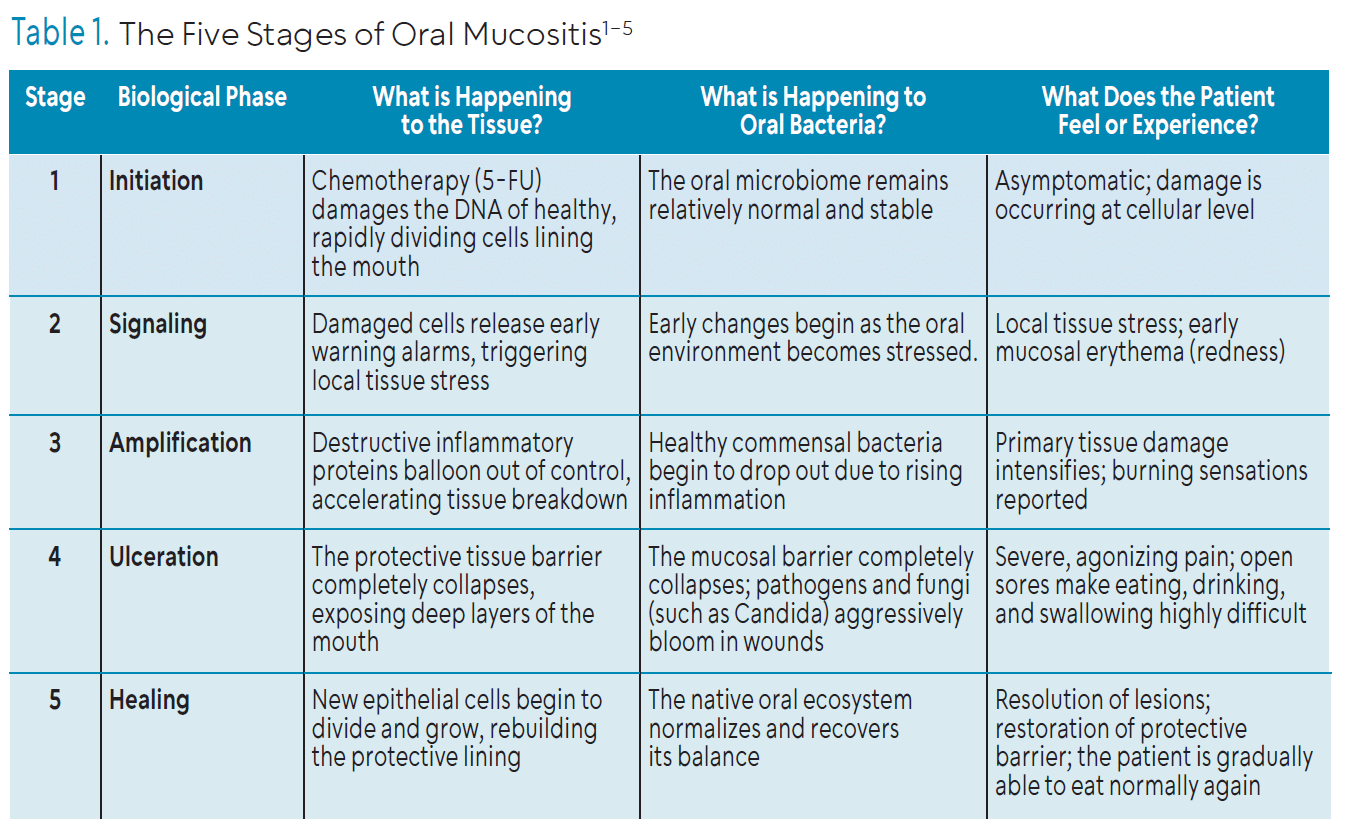
As these healthy epithelial layers are damaged, the structural integrity of the mucosal barrier collapses. This physical attack exposes underlying tissues, creates a sudden influx of cellular debris, and radically alters the local microenvironment, effectively allowing opportunistic pathogens to overgrow.3,10 This treatment-induced dysbiosis does not sit quietly; it acts as a secondary biological modifier that actively fuels local tissue damage. Consequently, oral mucositis (OM) manifests as a five-stage biological cascade, comprising initiation, signaling, amplification, ulceration, and healing, driven by the host’s inflammatory response to this shifting microbial dysbiosis.3,11 As pathogenic bacteria proliferate within the altered biofilm, they accelerate the inflammatory response by releasing pro-inflammatory cytokines, such as tumor necrosis factor-alpha and interleukin-6, creating a reservoir of pathogens and inflammatory markers that can ultimately impact the lower gastrointestinal tract (Table 1).
 Simultaneously, CRC chemotherapy often triggers intestinal mucositis, resulting in a systemic breakdown of the mucosal barrier and altered intestinal permeability.12 Within the oral cavity, chemotherapeutic toxicity to the salivary glands induces severe salivary hypofunction, depleting the mouth of its natural flushing mechanism and bicarbonate buffering capacity. Consequently, acids introduced through chemotherapy-induced nausea and vomiting or common patient coping mechanisms, such as consuming fruit juices or sucking on hard candies to combat a chemotherapy-induced metallic taste, become physically trapped. This prolonged acid retention drops the local oral pH below the critical thresholds, creating an environment that favors acidogenic species and rapidly increases the risk for cervical caries.3,13,14
Furthermore, the loss of healthy bacteria creates an empty ecological space that allows Candida albicans to transform into a harmful invader. This shift leads to secondary infections, such as oral candidiasis, which further compromise the patient’s nutritional status, induce severe oral pain, and disrupt oncology recovery timelines.14
The Probiotic Shield
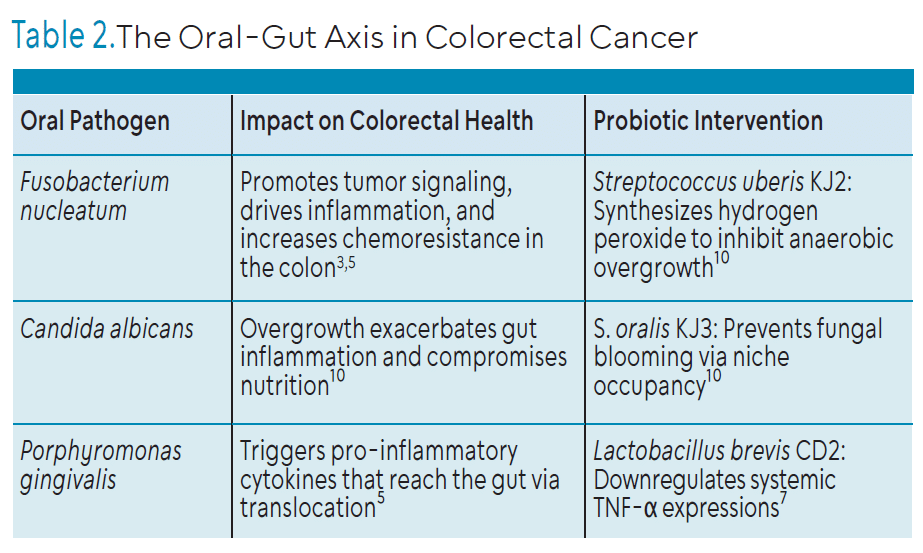
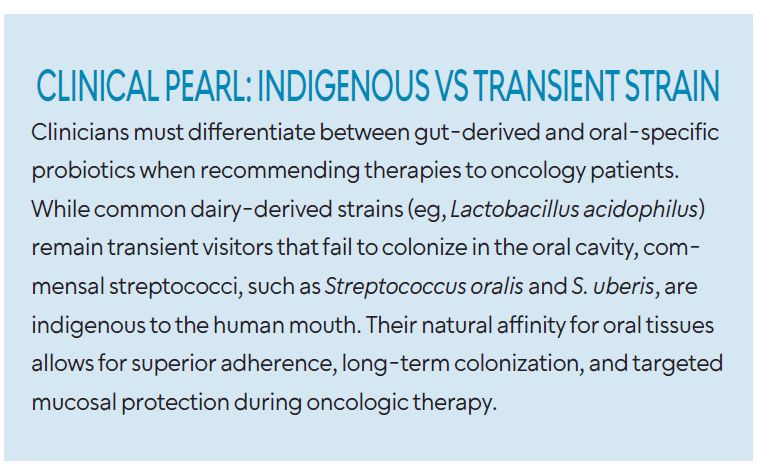
Oral-specific probiotics use three primary mechanisms to maintain health: competitive exclusion, antimicrobial production, and immunological stabilization. Unlike transient gut-derived probiotics that cannot effectively colonize oral structures, these indigenous strains specifically target the oral-gut axis by adhering directly to oral mucosa and dental hard tissues (Table 2).1,2
 Clinicians can mitigate the loss of healthy microbes traditionally seen during chemotherapy-induced dysbiosis through early biofilm saturation.3 Streptococcus rattus (JH145) serves as a primary replacement therapy strain. As a nonacidogenic variant, S. rattus lacks the genetic capacity to synthesize lactic acid, yet it actively outcompetes cariogenic S. mutans for binding sites on the salivary pellicle.15
By occupying these hard-tissue niches prior to the onset of chemotherapy-induced xerostomia, S. rattus effectively crowds out pathogens before stagnant dietary and regurgitated gastric acids become physically trapped in the oral microenvironment. This targeted colonization prevents the rapid, aggressive development of cervical decay patterns common to patients undergoing active cancer treatment.13,14 Furthermore, addressing this dysbiosis early matches the supportive care goals outlined by international mucositis management protocols, which emphasize mitigating local tissue insults to prevent secondary microbial complications.4
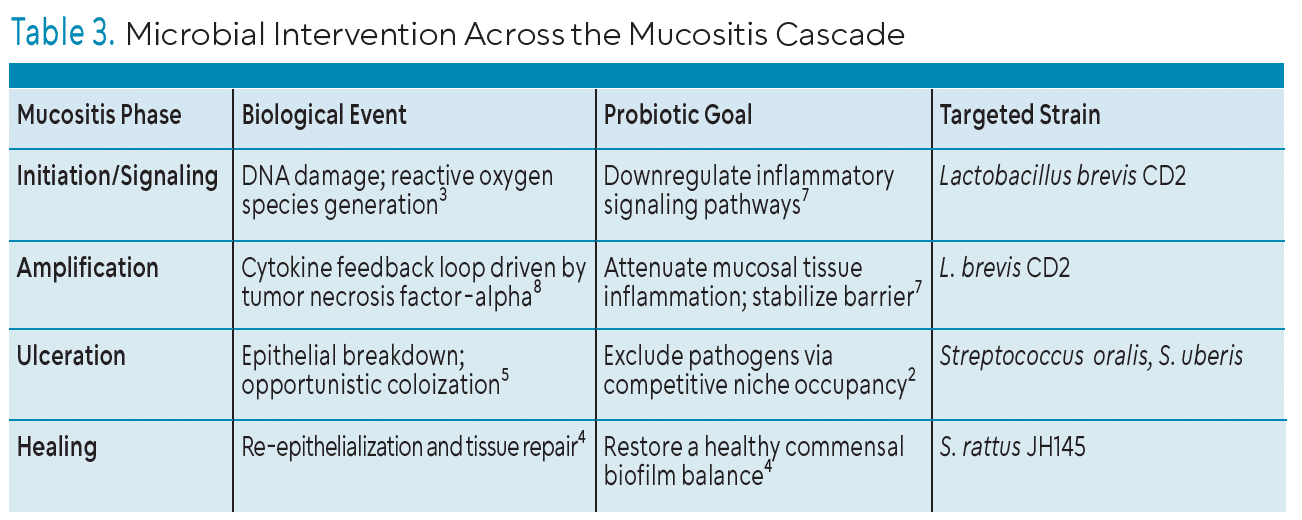
Healthy biofilms contain high concentrations of peroxide-producing streptococci, such as S. uberis (KJ2) and S. oralis (KJ3). Originally isolated from healthy subgingival plaque, these strains naturally synthesize low levels of hydrogen peroxide, creating a localized biochemical barrier that inhibits anaerobic pathogens such as F. nucleatum and Porphyromonas gingivalis.16 In patients with CRC, using this natural biological barrier to reduce the oral load of F. nucleatum is a protective strategy. Minimizing this oral reservoir directly limits the volume of bacteria capable of traveling through the oral-gut translocation pathway to colorectal lesions.5 Upon arrival at the gut mucosa, F. nucleatum utilizes specialized surface adhesins to attach to overexpressed tumor cell sugar residues, actively promoting cell proliferation, driving chronic inflammation, and compromising gut barrier permeability.12,17 Intercepting this pathogenic migration at its oral origin represents a potent preventive strategy in oncology care (Table 3).18
Probiotics also influence the host’s inflammatory response by downregulating destructive pro-inflammatory pathways. Strains, such as Lactobacillus brevis CD2, produce specific enzymes, such as arginine deiminase. The enzymes break down local L-arginine in the mouth, which directly starves the host pathways that would otherwise use that arginine to produce nitric oxide, a primary chemical driver of tissue damage, swelling, and severe pain in the oral lining.19
By calming this inflammatory chain reaction at the cellular level, L. brevis CD2 helps shield the delicate lining of the mouth, protects the barrier integrity of the tissue, and reduces the severity of painful mucosal sores. Research in cancer patients undergoing intensive treatments show that this protective enzyme pathway significantly limits the progression of severe, high-grade ulcers, allowing patients to continue eating and avoiding costly delays in their primary cancer treatment (Table 3).20
The Role of the Dental Hygienist
Within the dental hygiene “assessment, diagnosis, planning,implementation, evaluation, and documentation” process of care, clinicians must possess the knowledge to manage oral complications and infection risks across pre-, intra-, and post-treatment oncology phases. During the medical history review, clinicians must collect pertinent information to provide informed care and promote a collaborative relationship with the patient and the interprofessional care team.
Conducting interviews or a questionnaire needs to encourage open communication while allowing for further expansion of details with the patient.21 For example, asking questions such as:
- Are you currently being treated for any type of cancer?
- If you are currently being treated for a type of cancer, what kind of cancer is it?
- What kind of treatment are you undergoing? Is it surgery, radiation, chemotherapy, or some other kind?
- Has your oncology care team planned out any medication, vitamin, or supplement regimens for you for treatment or management of symptoms?
- Have you noticed any issues/symptoms from treatment so far with your mouth, such as dry mouth, ropey saliva, ulcers/sores, or any other issues?
- So that we can support you on this healthcare journey, can we have the name and phone number of the physician/oncologist you are working with so we can coordinate any dental or overall oral care needs?
Comprehensive data information collection enables quality communication with the interprofessional care team and supports necessary medical consultation during pretreatment and active oncologic care.22 It also allows patients to preliminarily tell the dental hygienist about what they may be experiencing before the extraoral and intraoral examination begins. Once initial information about the patient’s cancer status and phase of treatment is obtained, the oncology care team should be contacted to establish a line of communication between the dental home and the oncologist. The dental hygienist can request medical clearance and establish necessary protocols for elective, nonelective, or emergency procedures before initiating in-office care.22
When completing the extraoral and intraoral examination, make sure to note salivary flow, tongue texture, mucosal integrity, and any signs of ulcers, sores, or abnormal lesions. Documentation is key during this stage to managing patients’ needs and concerns throughout their treatment and establishes baseline data.21
Along with a comprehensive extraoral and intraoral examination, radiographs are essential for evaluating caries, osseous defects, and developmental anomalies. These should be completed in consultation with the dentist and the oncology care team depending on whether the patient is undergoing radiation treatment.22 Additionally, the dental hygiene care plan needs to include evidence-based recommendations for at-home oral hygiene therapies and specialized delivery techniques. The dental hygiene team is responsible for adjusting preventive strategies throughout treatment as needed based on changing symptoms or product intolerance.21
Educational Integration and Patient Counseling
While dental hygiene curricula comprehensively address nutritional counseling and medically complex care, there remains a need for stronger integration of continuing education content focused on managing oral and systemic side effects in patients undergoing cancer treatment. One of the current methodologies being explored is the synbiotic, or “seed, feed and protect” counseling strategy that incorporates the use of pre- and probiotics.23,24 This counseling strategy emphasizes the utilization of both pre- and probiotic products to be more successful than probiotics alone in management of oral pain, ulcers, and other side effects that arise during cancer treatments such as chemotherapy and radiation.23
 The prebiotic provides nutrients that selectively support the growth of beneficial bacteria already living in the gastrointestinal tract. Prebiotics act as a “seed” for a healthy microbiome. In contrast, a probiotic contains live microorganisms that are introduced directly to the body to help “feed” and balance the existing microbiome. Collectively, these interventions are formulated to preserve long-term function and maintenance and mitigate the severity of side effects.23,24
While natural dietary sources have been shown to provide some of these resources, in patients undergoing cancer treatment, severe depletion within their gut and oral microbiome requires additional assistance. Educating dental hygiene students, faculty, and clinicians to effectively discuss structured dietary counseling with patients is fundamental, especially as many patients experience malnutrition and difficulty maintaining routines due to taste aversions or oral pain.
Collaboration with the patient’s oncologist remains mandatory to select appropriate pre- and probiotic products, and delivery methods that support the oral and gut microbiome and help reduce symptoms.22 A large variety of products, such as toothpastes, lozenges, mouthrinses, pills, capsules, gummies, powders, tablets, gels, and liquids, are available.25 Finding a product that the patient will be most compliant with and is most accessible is important, but monitoring and documenting patient success are also essential.
Coordination with the patient’s oncological team is critical. The patient’s absolute neutrophil count should be closely monitored when it comes to treatment with pre- and probiotics. The immune system is already in a compromised state through anticancer treatments and if the white cell count (neutrophils) decreases too rapidly then the patient’s immune system is less likely to fight off infection.22
Conclusion
Long term maintenance of dental hygiene patients undergoing chemotherapeutic and radiation therapies for CRC who experience oral manifestations can facilitate stability or even resolution in some cases through use of a multistrain probiotic. The most successful probiotic strains identified as S. rattus, S. uberis, S. oralis, and L. brevis combat three of the more common oral bacteria directly related to oral symptoms and a potential progression of CRC effects. Through comprehensive medical history reviews, structured in-office preventive care, collaboration with the interprofessional care team, and patient-specific product selection recommendations, dental hygienists can significantly assist patients by managing and minimizing the oral and systemic side effects throughout treatment.
Acknowledgment
The authors wish to acknowledge the inspiration for this work: the memory of Heather M. Tuthill’s father, who passed away from cancer in 2020, and the ongoing strength of Emilie B. Ellis’s father in recently overcoming his battle with colon cancer.
References
- Deo PN, Deshmukh R. Oral microbiome: Unveiling the fundamentals. J Oral Maxillofac Pathol. 2019;23:122–128.
- Dewhirst FE, Chen T, Izard J, et al. The human oral microbiome. J Bacteriol. 2010;192:5002–5017.
- Hong BY, Sobue T, Choquette L, et al. Chemotherapy-induced oral mucositis is associated with detrimental bacterial dysbiosis. Microbiome. 2019;7:66.
- Elad S, Cheng KKF, Lalla RV, et al. MASCC/ISOO clinical practice guidelines for the management of mucositis secondary to cancer therapy. Cancer. 2020;126:4423–4431.
- Komiya Y, Shimomura Y, Higurashi T, et al. Patients with colorectal cancer have identical strains of Fusobacterium nucleatum in their colorectal cancer and oral cavity. Gut. 2019;68:1335–1337.
- Abed J, Emgård JEM, Zamir G, et al. Fap2 mediates fusobacterium nucleatum colorectal adenocarcinoma enrichment by binding to tumor-expressed gal-galnac. Cell Host Microbe. 2016;20:215–25.
- Peng X, Li Z, Pei Y, Zheng S, et al. Streptococcus salivarius K12 alleviates oral mucositis in patients undergoing radiotherapy for malignant head and neck tumors: a randomized controlled trial. J Clin Oncol Off J Am Soc Clin Oncol. 2024;42:1426–1435.
- Wescombe PA, Hale JDF, Heng NCK, Tagg JR. Developing oral probiotics from Streptococcus salivarius. Future Microbiol. 2012;7:1355–1371.
- Aprile G, Rihawi K, De Carlo E, Sonis ST. Treatment-related gastrointestinal toxicities and advanced colorectal or pancreatic cancer: A critical update. World J Gastroenterol. 2015;21:11793–1803.
- Sonis ST. Oral mucositis in cancer therapy. J Support Oncol. 2004;2(6 Suppl 3):3–8.
- Villa A, Sonis ST. Mucositis: pathobiology and management. Curr Opin Oncol. 2015;27:159–164.
- Hamouda N, Sano T, Oikawa Y, et al. Apoptosis, dysbiosis and expression of inflammatory cytokines are sequential events in the development of 5-fluorouracil-induced intestinal mucositis in mice. Basic Clin Pharmacol Toxicol. 2017;121:159–168.
- Bomfin LE, Braga CM, Oliveira TA, et al. 5-Fluorouracil induces inflammation and oxidative stress in the major salivary glands affecting salivary flow and saliva composition. Biochem Pharmacol. 2017;145:34–45.
- Sroussi HY, Epstein JB, Bensadoun RJ, et al. Common oral complications of head and neck cancer radiation therapy: mucositis, infections, saliva change, fibrosis, sensory dysfunctions, dental caries, periodontal disease, and osteoradionecrosis. Cancer Med. 2017;6:2918–2931.
- Hillman JD, McDonell E, Cramm T, Hillman CH, Zahradnik RT. A spontaneous lactate dehydrogenase deficient mutant of Streptococcus rattus for use as a probiotic in the prevention of dental caries. J Appl Microbiol. 2009;107:1551–1558.
- Beattie RE. Probiotics for oral health: a critical evaluation of bacterial strains. Front Microbiol. 2024;15:1430810.
- Rubinstein MR, Wang X, Liu W, Hao Y, Cai G, Han YW. Fusobacterium nucleatum promotes colorectal carcinogenesis by modulating E-cadherin/β-catenin signaling via its FadA adhesin. Cell Host Microbe. 2013;14:195–206.
- Wang S, Liu Y, Li J, et al. Fusobacterium nucleatum acts as a pro-carcinogenic bacterium in colorectal cancer: from association to causality. Front Cell Dev Biol. 2021;9:710165.
- Riccia DND, Bizzini F, Perilli MG, et al. Anti-inflammatory effects of Lactobacillus brevis (CD2) on periodontal disease. Oral Dis. 2007;13:376–385.
- Sharma A, Rath GK, Chaudhary SP, Thakar A, Mohanti BK, Bahadur S. Lactobacillus brevis CD2 lozenges reduce radiation- and chemotherapy-induced mucositis in patients with head and neck cancer: a randomized double-blind placebo-controlled study. Eur J Cancer. 2012;48:875–881.
- Boyd L, Mallonnee L, Wyche C. Wilkins’ Clinical Practice of the Dental Hygienist. 13th ed. Burlington, Massachusetts: Jones and Bartlett Learning; 2020.
- Kerr A, Miller C, Rhodus N, Stoopler E, Tresiter N. Little and Falace’s Dental Management of the Medically Compromised Patient. 10th ed. St. Louis: Elsevier; 2024.
- Singh NK, Beckett JM, Kalpurath K, Ishaq M, Ahmad T, Eri RD. Synbiotics as supplemental therapy for the alleviation of chemotherapy-associated symptoms in patients with solid tumours. Nutrients. 2023;15:1759.
- Dietert RR, Dietert JM. The microbiome and sustainable healthcare. Healthcare. 2015;3:100–129.
- Bruhn A, Suedbeck J, Eusner L. Probiotic supplements and oral health. Dimensions of Dental Hygiene. 2024;22(3):14–17.
From Dimensions of Dental Hygiene. September/October 2026; 24(5):9-13