


The Mouth-Brain Connection Gets More Complicated
Dental hygienists play an important role in prevention, early identification, and individualized care for those with cognitive decline.
This course was published in the September/October 2026 issue and expires October 2029. The authors have no commercial conflicts of interest to disclose. This 2 credit hour self-study activity is electronically mediated.
AGD Subject Code: 490
EDUCATIONAL OBJECTIVES
After reading this course, the participant should be able to:
- Describe proposed biological mechanisms linking periodontitis with dementia.
- Identify behavioral, physical, and salivary factors affecting oral health in patients with dementia.
- Apply preventive and adaptive oral care strategies for patients experiencing cognitive decline.
As life expectancy increases, age-related conditions, such as neurodegenerative diseases and periodontitis, are becoming more prevalent.1,2 Mild cognitive impairment is one of the earliest signs of declining brain function, affecting memory, language, and judgment. These changes indicate an increased likelihood of developing neurodegenerative diseases, such as dementia.1,3
Dementia is an umbrella term used to describe progressive loss of cognitive abilities that interferes with daily life. Alzheimer disease (AD), the most common type of dementia, accounts for 60% to 80% of all dementia diagnoses. AD is characterized by progressive cognitive decline and currently no curative treatment exists, leaving early intervention as the most effective strategies for managing daily life.4
Oral health represents one potentially modifiable factor. Periodontitis affects nearly half of adults in the United States and remains the leading cause of tooth loss.5–8 While largely preventable, periodontitis cannot be reversed once established, but it can be managed through professional care and improved oral hygiene.8 This disease contributes to a persistent proinflammatory state through bacterial dysbiosis and host immune responses, creating potential systemic effects. As evidence increasingly associates systemic inflammation with accelerated cognitive decline, the intersection of periodontitis and dementia has gained attention.2,5,9 Understanding this relationship may help refine preventive strategies and clarify how cognitive decline impacts periodontal health and vice versa.
How Periodontitis Impacts Dementia
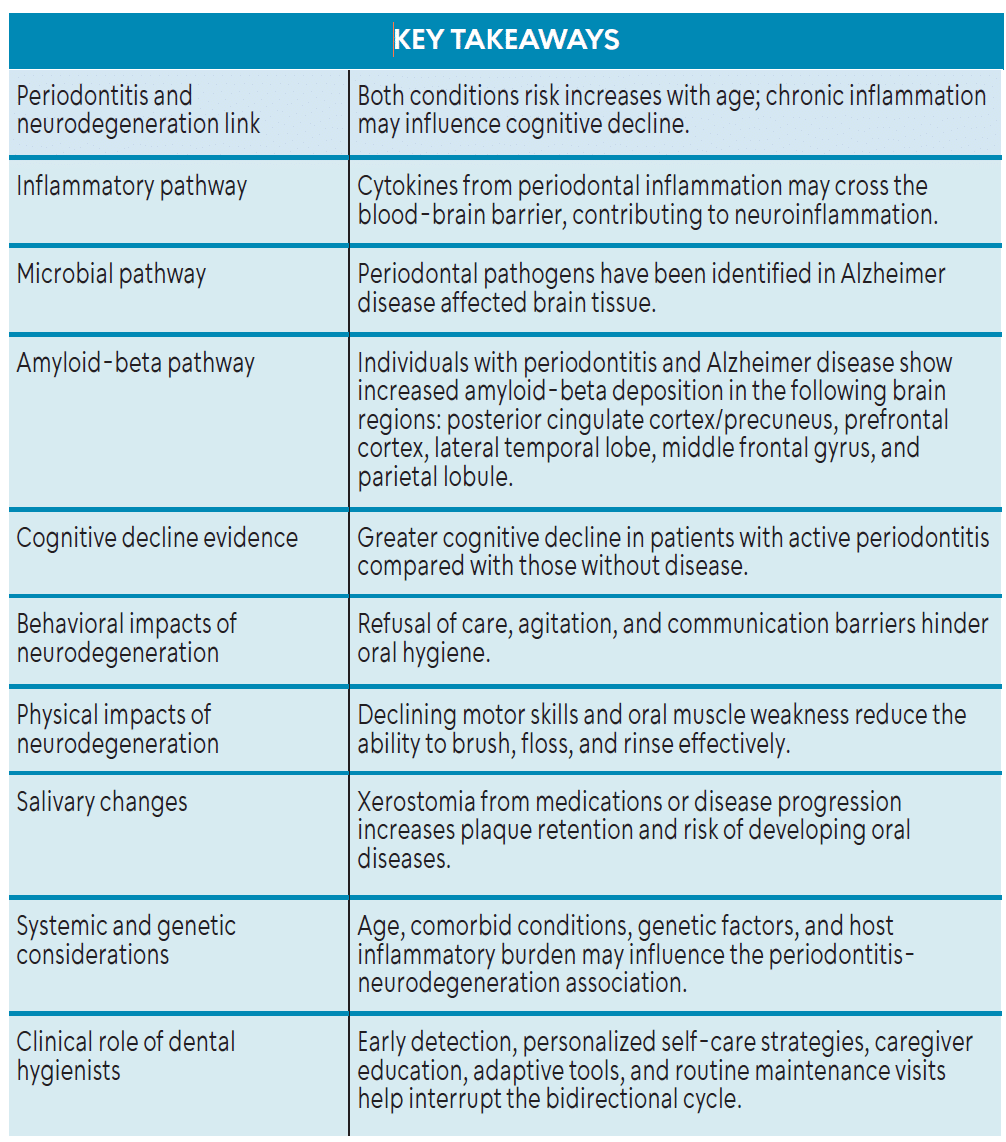
Chronic inflammation is a common feature of both periodontitis and dementia. Gram-negative periodontal pathogens stimulate a sustained host immune response, prompting the release of proinflammatory cytokines. These cytokines may circulate systemically and affect distant organ systems, including the central nervous system. Multiple studies suggest that elevated systemic inflammation can increase the permeability of the blood-brain barrier (BBB). Once the BBB is compromised, cytokines may enter neural tissue, activating glial cells and contributing to the type of neuroinflammation seen in AD.10–13 Although more studies are needed, this pathway represents a biologically plausible connection between the two conditions.
Another potential mechanism of etiologic crossover is the migration of oral pathogens into the brain. Inflammatory changes may make the BBB more permeable, allowing oral pathogens to enter neural tissue. Lipopolysaccharide (LPS) endotoxins produced by the periodontal pathogen Porphyromonas gingivalis have been identified in the brain tissue of individuals with AD.14,15 LPS is known to trigger neural cell responses that can worsen cognitive dysfunction, including the dysfunction seen in AD.10 The presence of LPS in brain tissue alone does not clearly indicate that higher levels are associated with more severe stages of periodontitis, because the samples studied were only obtained from individuals with moderate to severe disease.14
Further research suggests an alternative pathway for oral microbial invasion of the brain. Oral bacteria, such as P. gingivalis, Treponema denticola, and Tannerella forsythia, have been identified in post-mortem brain samples, suggesting a connection between these sites. Researchers have proposed that these pathogens may reach neural tissue through systemic circulation and peripheral nerves, like the trigeminal nerve.2,10–12 While this theory is still emerging, the presence of oral bacteria within neural tissue reinforces the possibility of a direct oral-brain link.
Amyloid beta (Aβ) protein dysregulation, a hallmark of AD, may also be influenced by periodontal inflammation. In healthy brains, Aβ is continually removed through lymphatic flow during sleep, but chronic inflammation may impair this process.9,11,12,15,16 Healthy older adults with periodontitis have been shown to exhibit higher Aβ deposition in brain regions vulnerable to AD, including the posterior cingulate cortex/precuneus, prefrontal cortex, lateral temporal lobe, middle frontal gyrus, and parietal lobule. Because peripheral inflammation influences Aβ accumulation in these regions, chronic inflammation associated with periodontitis may further contribute to neurodegeneration.11,12,15
Although inflammatory signaling, microbial translocation, and Aβ dysregulation are often discussed as separate processes, current literature suggests these mechanisms may occur concurrently rather than independently. Chronic periodontal inflammation may contribute to a sustained systemic immune response that can increase BBB permeability and influence exposure of neural tissue to inflammatory mediators and microbial byproducts.10–12,15 Repeated exposure to these factors may promote microglial activation and ongoing neuroinflammatory responses, processes commonly observed in dementia.5,10–12 Regardless of the mechanisms, the substantial evidence in support of periodontitis impacting neurodegeneration is significant.
Clinical Evidence Supporting the Connection
The use of standardized cognitive testing provides additional support for these relationships. In one clinical trial, patients with active periodontitis demonstrated a greater decline on the Alzheimer’s Disease Assessment Scale-Cognitive Subscale over 6 months compared with those without periodontitis.17 Another study using the Mini-Mental State Examination cognitive test found that individuals with P. gingivalis present in their saliva were at an increased risk for developing AD.2 Similarly, additional research suggests that periodontitis may increase the risk of developing AD by 1.7-fold.12,18
When considered collectively, findings from epidemiological studies, standardized cognitive assessments, and proposed biological mechanisms indicate an association between periodontitis and dementia.5,7,11,12,17 Even though a causal relationship has not been established, the consistency of observations across multiple study designs supports continued attention to periodontal health as one factor relevant to cognitive aging and neurodegenerative disease risk.6,12,18 While the above mechanisms describe how periodontitis may influence cognitive decline, it is also important to explore the impact dementia may have on periodontal health.
How Dementia Impacts Periodontal Health
Dementia frequently alters behavior, communication, and daily functioning.7,19 As dementia progresses, individuals often become increasingly dependent on caregivers for oral hygiene. This loss of autonomy can contribute to agitation or refusal of care, complicating efforts to provide consistent daily plaque removal. Not surprisingly, these behavioral barriers can lead to poor oral hygiene and increase susceptibility to periodontitis.19
Many individuals with cognitive impairment are unable to verbalize oral pain or discomfort, so caregivers must rely on nonverbal cues such as facial expressions, vocalization, or changes in behavior. Unfortunately, this often leads to delayed or insufficient treatment. More frequent dental examinations for older adults with dementia, as well as proper oral health education provided by oral health professionals, can be methods to combat behavioral barriers to oral care.19
Physical impairments, such as declining coordination and fine motor control, develop as AD progresses, limiting patients’ ability to brush effectively, manipulate floss, or rinse and expectorate. Research shows that oral hygiene performance worsens with increasing dementia, even when individuals remain motivated to care for their teeth due to the associated physical impairments.7,20 These limitations contribute to an increase in plaque accumulation and subsequently raise the risk for periodontitis.20
Because these functional limitations impact a patient’s ability to perform routine oral hygiene self-care, leading to increased plaque accumulation and a higher risk for periodontitis, adaptive self-care tools can help compensate for diminished motor control. Guided brushing or supervised oral hygiene care may also reduce frustration for both caregivers and patients. Tailoring oral hygiene recommendations to a patient’s abilities is essential for maintaining periodontal stability and supporting patients in ways that preserve independence as much as possible.20,21
Salivary dysfunction is another contributing factor to periodontitis. Reduced salivary flow, or xerostomia, may arise from commonly prescribed medications for dementia, including antidepressants and sedatives, or may result from general aging and disease-related physiological changes.21,22 Reduced saliva increases the risk of dental caries, candidiasis, oral malodor, and plaque retention, all of which contribute to periodontal breakdown.21 Understanding the multifactorial causes of xerostomia allows clinicians to personalize preventive strategies.
Genetic susceptibility and age appear to shape the relationship between periodontitis and neurodegeneration. The APOE4 allele, a major genetic risk factor for AD, increases vulnerability to periodontal pathogens and intensifies infection-driven neuroinflammation. Toxic enzymes produced by P. gingivalis known as gingipains can cleave APOE4, amplifying Aβ pathology. Young adults with dementia have the highest risk of developing periodontitis, likely due to greater biological susceptibility and more rapid functional decline. Similarly, bidirectional evidence suggests that chronic periodontitis increases risk for dementia across the lifespan, but the association is often more pronounced in younger groups.6,7,12
Systemic comorbidities further magnify these relationships. Conditions such as hyperlipidemia, diabetes, stroke, cardiovascular disease, chronic obstructive pulmonary disease, and hypertension, increase the risk of periodontitis in populations with dementia, with hyperlipidemia emerging as one of the strongest modifiers of risk. More severe or progressing periodontitis, reflected by tooth extraction or surgical treatment, is also linked to higher dementia risk.7,11,12 Together, these genetic, age-related, and systemic factors suggest that periodontitis functions as a modifiable contributor within the broader neuroinflammatory landscape of dementia.6,7,11,12
The Role of the Dental Hygienist
Dental hygienists play a vital role in preventing and managing oral diseases and may indirectly influence health outcomes. Uniquely positioned within healthcare to identify early signs of periodontal inflammation,8 dental hygienists routinely perform clinical evaluations of the periodontium. Also, dental hygienists provide consistent professional care, including periodontal assessments, nonsurgical periodontal therapy when indicated, and ongoing periodontal maintenance, all of which are essential for controlling chronic inflammation and limiting systemic disease.18
 Moreover, dental hygienists may be among the first healthcare providers to observe changes that could indicate declining cognitive or physical functional status. Patterns such as missed appointments, decreased oral hygiene effectiveness, or increased caregiver involvement may suggest the need for adjusted care strategies or further evaluation.7,19,20 When working with patients who have diminished decision-making capacity, informed consent may need to involve family members with healthcare proxy or medical power of attorney, or legal caregivers. In these situations, dental hygienists can encourage communication between patients, caregivers, and other healthcare professionals when concerns related to cognitive function arise. These considerations ensure both ethical and effective care.19–21
In addition to providing routine clinical care, dental hygienists are well-positioned to educate patients and caregivers about risk factors for disease, as well as supporting patients in adopting effective preventive behaviors.8 Self-care recommendations should be individualized to the needs of patients, as well as patient and caregiver abilities. Adaptive devices, such as electric toothbrushes, modified toothbrush handles, and water flossers, can support patients with reduced dexterity. However, dental hygienists must assess the patient’s ability to swallow before recommending mouthrinses or water flossers to avoid aspiration risk.20,22
As cognitive impairment progresses, responsibility for daily oral hygiene often shifts to caregivers who may have limited experience or training.19,22 Clear instructions, simplified techniques, and realistic expectations may support greater consistency with oral care while reducing caregiver burden.19,20 Reinforcement through demonstration, written materials, and follow-up during maintenance visits may further support long-term oral health outcomes.20,22
While the presence of periodontitis alone is not the sole contributing factor to dementia, chronic, sustained systemic inflammation and host immune response may play a significant role in cognitive decline.5,6 Ultimately, understanding the oral systemic connection empowers dental hygienists to provide care that supports not only oral health but also overall quality of life. By adapting preventive and supportive strategies to individual patient capabilities, dental hygienists can assist in maintaining periodontal stability while addressing the practical challenges associated with dementia.18–22 This approach reflects the broader oral-systemic relationship and supports interdisciplinary care for patients experiencing cognitive decline.6,19
Conclusion
Current evidence suggests a meaningful relationship between periodontitis and neurodegenerative diseases supported by proposed mechanisms involving inflammation dysregulation, microbial migration, and Aβ interactions. Conversely, dementia introduces behavioral, physical, and salivary challenges that increase periodontal susceptibility. Although the precise nature of this bidirectional relationship has yet to be determined, the implications for dental hygienists are clear: preventive care, patient-specific education, and adaptation to functional limitations are essential.
While existing research describes an association between periodontitis and dementia, several limitations should be considered when interpreting these findings. Much of the available evidence is observational, which limits the ability to establish causality. Differences in study design, definitions of periodontitis, cognitive assessment methods, and population characteristics also make direct comparison across studies challenging. For these reasons, periodontitis is best understood as one of several potentially modifiable factors within a complex and multifactorial disease process, rather than as an independent cause of dementia.
Despite these limitations, findings across studies consistently suggest a relationship between oral inflammation and cognitive decline exists. Preventive periodontal care, early identification of disease, and individualized maintenance may help manage chronic inflammatory burden over time. Additional research is needed to further clarify underlying mechanisms and to determine the potential impact of sustained periodontal management on cognitive outcomes. However, understanding these interconnected processes allows dental hygienists to more effectively support patients and caregivers, and potentially contribute to strategies that lessen the broader impact of dementia.
References
- National Institute on Aging. What Is Mild Cognitive Impairment? Available at alzheimers.gov/alzheimers-dementias/mild-cognitive-impairment. Accessed August 22, 2026.
- Leblhuber F, Huemer J, Steiner K, Gostner JM, Fuchs D. Correction to: Knock-on effect of periodontitis to the pathogenesis of Alzheimer’s disease? Wien Klin Wochenschr. 2020;132:549-550.
- Mayo Clinic. Mild Cognitive Impairment: Symptoms and Causes. Available at mayoclinic.org/diseases-conditions/mild-cognitive-impairment/symptoms-causes/syc-20354578. Accessed August 22, 2026.
- United States Centers for Disease Control and Prevention. About Dementia. Available at cdc.gov/alzheimers-dementia/about/index.html. Accessed August 22, 2026.
- Farsi DN, Abadalkareem R, Linden GJ, et al. Periodontitis and incident cognitive decline and dementia: A 15-year prospective cohort study of older men residing in Northern Ireland. J Alzheimers Dis. 2026;109:980-995.
- Harding A, Singhrao SK. Periodontitis and dementia: a bidirectional relationship? J Dent Res. 2022;101:245-246.
- Ma KS, Hasturk H, Carreras I, et al. Dementia and the risk of periodontitis: a population-based cohort study. J Dent Res. 2022;101:270-277.
- Kinane DF, Stathopoulou PG, Papapanou PN. Periodontal diseases. Nat Rev Dis Primer. 2017;3:17038.
- Laugisch O, Johnen A, Buergin W, et al. Oral and periodontal health in patients with alzheimer’s disease and other forms of dementia – a cross-sectional pilot study. Oral Health Prev Dent. 2021;19:255-261.
- Said-Sadier N, Sayegh B, Farah R, et al. Association between periodontal disease and cognitive impairment in adults. Int J Environ Res Public Health. 2023;20:4707.
- Hwang G, Lee SH, Han SW, et al. Longitudinal association of chronic periodontitis with all-cause dementia, Alzheimer disease, vascular dementia, and mild cognitive impairment: a distributed network analysis. GeroScience. 2026;48:3151-3163.
- Wagaskar P, Gaikwad S, Suryawanshi M, Patil A. The link between oral health and neurodegeneration: a review of periodontitis in Alzheimer’s and Parkinson’s disease and dementia. Inflammopharmacology. 2025;33(9):5023-5036.
- Chen CK, Wu YT, Chang YC. Association between chronic periodontitis and the risk of Alzheimer’s disease: a retrospective, population-based, matched-cohort study. Alzheimers Res Ther. 2017;9:56-57.
- Guo H, Chang S, Pi X, et al. The effect of periodontitis on dementia and cognitive impairment: a meta-analysis. Int J Environ Res Public Health. 2021;18:6823.
- Kamer AR, Pirraglia E, Tsui W, et al. Periodontal disease associates with higher brain amyloid load in normal elderly. Neurobiol Aging. 2015;36:627-633.
- Keil SA, Jansson D, Braun M, Iliff JJ. Glymphatic dysfunction in Alzheimer’s disease: A critical appraisal. Sci Am Assoc Adv Sci. 2025;389:8269.
- Ide M, Harris M, Stevens A, et al. Periodontitis and cognitive decline in alzheimer’s disease. PloS One. 2016;11:e0151081.
- Leira Y, Vivancos J, Diz P, Martín Á, Carasol M, Frank A. The association between periodontitis and cerebrovascular disease, and dementia. Scientific report of the working group of the Spanish Society of Periodontology and the Spanish Society of Neurology. Neurol Barc Engl Ed. 2024;39:302-311.
- Lauritano D, Moreo G, Della Vella F, et al. Oral health status and need for oral care in an aging population: a systematic review. Int J Environ Res Public Health. 2019;16:4558.
- Shirobe M, Edahiro A, Motokawa K, et al. Association between dementia severity and oral hygiene management issues in older adults with alzheimer’s disease: a cross-sectional study. Int J Environ Res Public Health. 2023;20:3841.
- Gao SS, Chu CH, Young FYF. Oral health and care for elderly people with alzheimer’s disease. Int J Environ Res Public Health. 2020;17:5713.
- Foley NC, Affoo RH, Siqueira WL, Martin RE. A systematic review examining the oral health status of persons with dementia. JDR Clin Transl Res. 2017;2:330-342.
From Dimensions of Dental Hygiene. September/October 2026; 24(5):36-39