
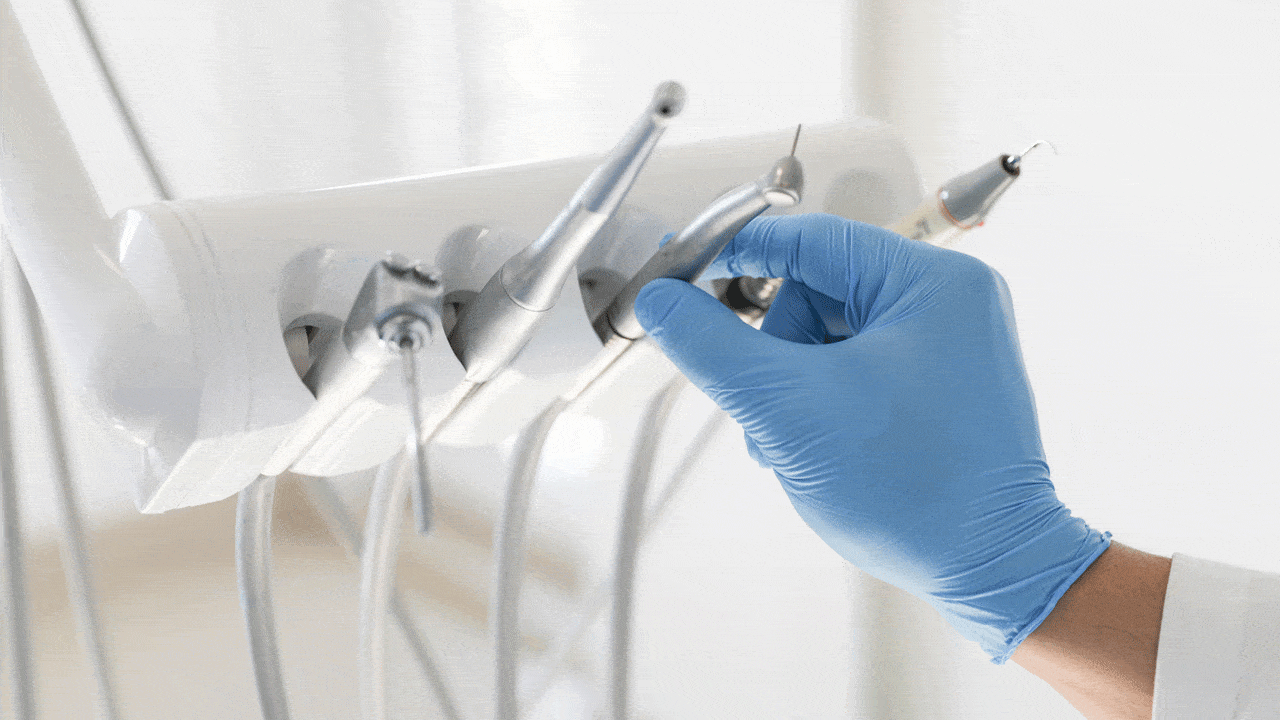
A New Generation of Quiet Dental Drills Is on the Way
Advanced aeroacoustic engineering may soon deliver dental drills that are not only quieter, but redesigned to ease patient anxiety without compromising performance.
Oral health professionals may soon have access to a new class of dental drills engineered to dramatically reduce the high-pitched noise that has long contributed to patient anxiety, particularly among young patients. Recent research presented at the Joint Meeting of the Acoustical Society of America and the Acoustical Society of Japan highlights how advanced airflow modeling is being used to redesign the sound profile of high-speed handpieces.
The familiar whine of an air-driven drill originates from turbulent, ultra-fast airflow within the turbine system, which typically reaches rotational speeds near 320,000 rpm. Using one of Japan’s leading supercomputers, researchers conducted large-scale aeroacoustic simulations to visualize both internal and external airflow. These models revealed the precise regions where noise is generated and demonstrated how airflow patterns interact to produce the sharp, high-frequency sound that many patients find unsettling.
Importantly, the findings show that simply lowering the overall noise level is not enough. The quality of the sound, its pitch and frequency distribution, plays a major role in how patients perceive it. Young listeners, in particular, are more sensitive to high-frequency components, often describing the sound as louder or more uncomfortable than adults perceive it to be.
Armed with these data, engineers and dental researchers are exploring refinements to turbine blade geometry and exhaust port design. The goal is twofold: reduce unnecessary turbulence that contributes to noise and reshape the acoustic output into a sound profile that feels less piercing while maintaining the drill’s cutting efficiency and safety signals.
Next steps include collaboration with dental manufacturers to develop functional prototypes for clinical testing. While completely silent drills are neither feasible nor desirable, the ability to create a more calming and less aversive sound environment could meaningfully improve patient comfort, increase treatment acceptance, and support better long-term oral health habits. Click here to read more.